

Private credit funds face rising redemptions and defaults in 2026. Advisors say some caution is reasonable, but not a broad meltdown. Here’s what to know.
Private Credit Risks in 2026: What US Investors Need to Know Before Adding Exposure
Private credit has become one of the fastest growing corners of the investment world over the past decade, and it has increasingly found its way into portfolios held by everyday investors, not just large institutions. But recent headlines about rising redemption requests and potential trouble in certain funds have left many people wondering whether the private credit boom is starting to show cracks.
According to financial advisors, the honest answer sits somewhere in the middle. There are real pockets of weakness worth watching closely, but that does not necessarily mean the entire asset class is headed for a broad collapse. Understanding how private credit works, where the current stress is coming from, and how to evaluate your own exposure can help you make a clearer, more informed decision about whether this investment fits your portfolio.
What Private Credit Actually Is
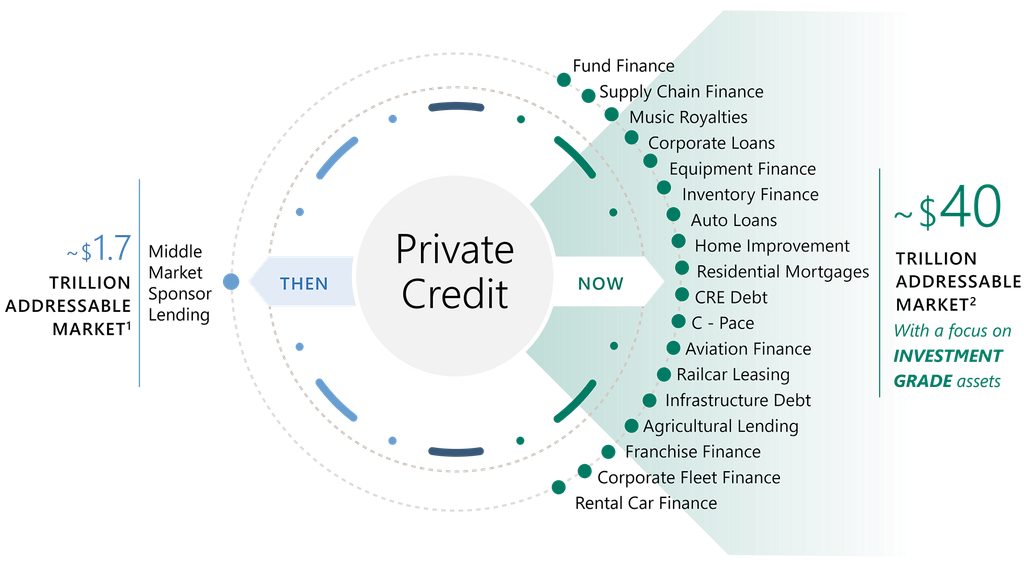
At its core, private credit refers to loans made directly to companies by investment firms, rather than through traditional bank lending or public bond markets. Asset managers raise capital from investors, pool that money into a fund, and then use it to lend to businesses, typically mid sized companies that may not have easy access to traditional financing.
In exchange for taking on more risk and offering less liquidity than a typical bond or stock investment, these loans usually carry higher interest rates. Investors in the fund earn a share of that interest as their return. Many of these loans use floating interest rates, which means the rate paid by the borrower, and earned by the investor, moves up or down along with benchmark rates set by the Federal Reserve.
This structure explains much of private credit’s appeal over the last several years. As interest rates climbed, private credit funds were able to offer investors meaningfully higher yields compared to more traditional fixed income options like government or corporate bonds. That combination of higher income potential and access to a market once reserved mostly for large institutions has fueled rapid growth in demand from individual investors as well.
Why Concerns Are Surfacing Now
The current wave of concern centers on a specific segment of the private credit market: semi liquid funds. These are structured to allow individual investors periodic access to their money, unlike traditional private credit vehicles that lock up capital for years at a time. Semi liquid funds typically allow investors to request redemptions on a regular basis, such as quarterly, but the amount that can be withdrawn at any one time is often capped.
This year, some of these semi liquid funds have seen a noticeable spike in redemption requests. When a large number of investors want to pull money out at once, it can strain a fund’s ability to meet those requests, since the underlying loans held by the fund are not easily sold on short notice. That mismatch between investor expectations of liquidity and the actual illiquid nature of the underlying assets is at the heart of the current unease.
Beyond redemption pressure, there is a second and arguably more fundamental concern facing certain private credit funds: rising defaults. Advisors and analysts expect default rates to increase in specific pockets of the market, particularly among loans made to software companies. A key driver behind this trend is disruption from artificial intelligence, which is reshaping competitive dynamics within the software industry faster than many lenders anticipated when those loans were originally underwritten.
Companies that once looked like stable, cash generating borrowers can find their business models challenged quickly if AI driven competitors or AI powered efficiency gains erode their market position. For lenders who extended credit based on assumptions that no longer hold up as well, this creates real risk of missed payments or outright default.
Is This a Systemic Problem or a Contained One
Despite these warning signs, several respected voices in the investment world argue that current stress in private credit does not point to a systemwide meltdown. Prominent investors, including well known figures in distressed debt and credit markets, have pushed back on the idea that private credit as a whole is unraveling, suggesting instead that the trouble is concentrated in specific fund structures and sectors rather than spread evenly across the asset class.
Crystal Cox, a certified financial planner and senior vice president at Wealthspire Advisors in Madison, Wisconsin, offered a similarly measured take. She noted that some caution around private credit is reasonable given current conditions, but pushed back on the notion that the sector is on the verge of widespread trouble, calling that narrative overstated.
This nuanced view matters for investors trying to sort through often alarming headlines. Media coverage that focuses heavily on redemption spikes and rising defaults can create an impression of across the board danger, when in reality the picture is more mixed. Some private credit strategies, sectors, and fund structures are under real pressure, while others remain comparatively stable.
What Sets the Riskier Funds Apart
For investors trying to assess their own exposure, it helps to understand which characteristics tend to correlate with higher risk in today’s environment. Funds most affected by redemption pressure tend to be semi liquid structures marketed to individual investors, since these are the vehicles where liquidity mismatches are most likely to surface.
On the default side, exposure to software lending, particularly loans made to companies whose competitive advantage could be eroded by artificial intelligence, appears to be a key risk factor. Loans concentrated in more traditional, less technology exposed industries may carry a different risk profile altogether.
Fund structure also matters a great deal. Traditional, long locked private credit funds that do not offer regular redemption windows are largely insulated from the type of liquidity crunch currently affecting semi liquid vehicles, since investors in those funds already committed their capital for a defined period without expecting early access.
Questions Investors Should Ask Before Investing or Staying Invested
Given the mixed picture, financial advisors generally recommend a few key questions for anyone considering private credit, or already holding it in a portfolio.
First, understand exactly what type of fund you own or are considering. Is it a traditional, long locked private credit fund, or a semi liquid vehicle that offers periodic redemptions? This distinction alone can significantly change your risk exposure to the liquidity concerns currently making headlines.
Second, look into what types of loans and borrowers the fund holds. A fund heavily concentrated in software lending may carry different risks than one diversified across healthcare, industrials, consumer goods, or other sectors less directly exposed to AI driven disruption.
Third, consider how private credit fits into your broader portfolio and financial plan. Because these investments are inherently less liquid and carry higher risk than many traditional fixed income options, they are generally better suited as a smaller allocation within a diversified portfolio rather than a core holding, particularly for investors who may need access to their money on short notice.
Fourth, review historical redemption and default data for the specific fund, not just the asset class as a whole. Broad statistics about private credit can obscure meaningful differences between well managed funds with strong underwriting standards and those facing more acute stress.
The Bigger Picture for US Investors
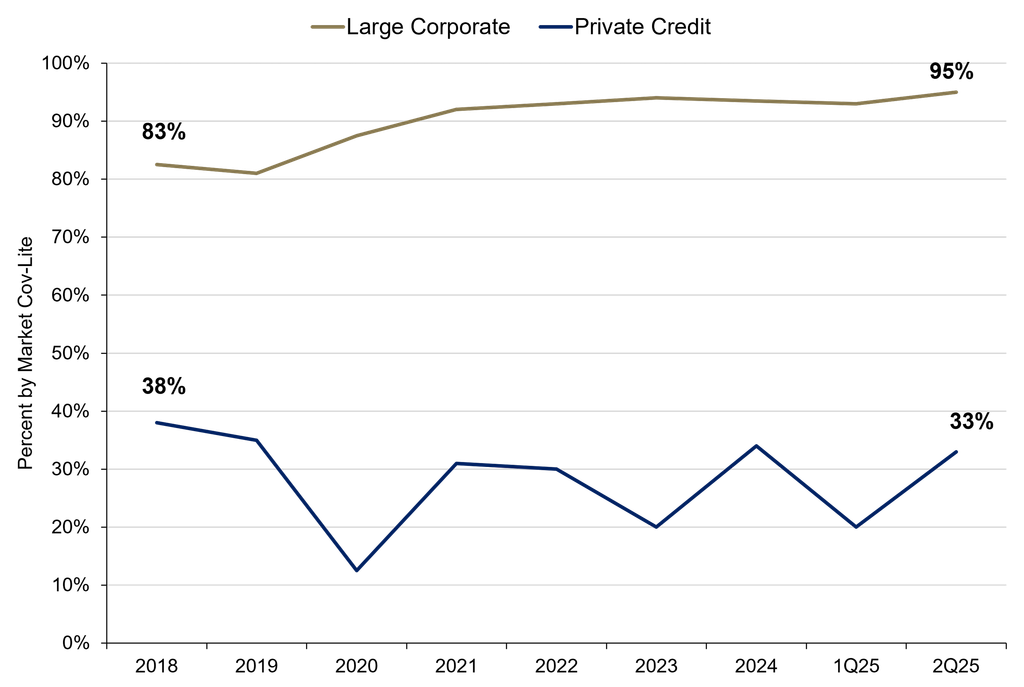
Private credit’s rapid growth over the past several years reflects a genuine shift in how companies access capital and how investors seek yield in a changing interest rate environment. That growth has brought real benefits, including higher income potential and expanded access to a previously institutional dominated market. But rapid growth in any asset class also tends to invite closer scrutiny once cracks begin to show, and that appears to be exactly what is happening now.
The current concerns around private credit, rising redemption requests in semi liquid funds and expected default increases tied to AI disruption in software lending, are legitimate and worth monitoring closely. At the same time, the evidence so far points toward contained, sector specific stress rather than a systemic crisis threatening the entire private credit market.
For individual investors, the most productive response is neither panic nor complacency. Instead, it means taking a closer look at the specific funds you hold or are considering, understanding their liquidity terms and lending concentrations, and making sure private credit represents an appropriately sized piece of a well diversified financial plan. As one advisor put it, some caution is reasonable. That caution, paired with careful due diligence rather than reactionary headlines, is likely the smartest path forward for US investors navigating this evolving corner of the credit market.
Key Takeaways
Private credit funds make direct loans to companies and typically pay investors higher interest to compensate for illiquidity and added risk.
Some semi liquid private credit funds have faced a wave of redemption requests in 2026, raising concerns about liquidity mismatches.
Defaults are expected to rise in certain private credit segments, particularly software lending affected by artificial intelligence disruption.
Financial advisors say the current stress appears contained to specific fund types and sectors rather than signaling a broad based crisis across the entire private credit market.
Investors should understand a fund’s liquidity structure, sector concentration, and underwriting quality before adding or maintaining exposure to private credit.
Source: CNBC — When it comes to private credit, ‘some caution is reasonable,’ advisor says. What to know