

New to investing? Learn how mutual funds work, how automatic recurring contributions build wealth over time, and how to start investing in your 20s.
How to Invest in Mutual Funds in Your 20s: SIP, Risk & Strategy Explained
You are sitting with your laptop open, a student loan bill in one tab and your checking account balance in another, and someone just told you that you should be investing. It feels almost laughable. Between rent, groceries, a car payment, maybe a credit card balance you are chipping away at, and an entry level salary that does not stretch as far as you hoped, the idea of putting money into the stock market can feel like a luxury reserved for people who already have it figured out.
Here is the thing. You do not need to have it all figured out to start. Investing in your 20s is less about having a large amount of money and more about giving your money time to potentially grow. Mutual funds in your 20s can be one accessible way to begin, because they are built for people who want diversification and professional management without having to pick individual stocks themselves.
This guide will walk you through what mutual funds actually are, why time matters so much when you are young, how automatic recurring investing works in the United States, and how to think about building a simple, long term strategy. Nothing here promises guaranteed returns or a fast path to wealth. Investing involves real risk, and this article is meant to help you understand the landscape so you can make informed decisions, not to tell you exactly what to do with your money.
What Are Mutual Funds?
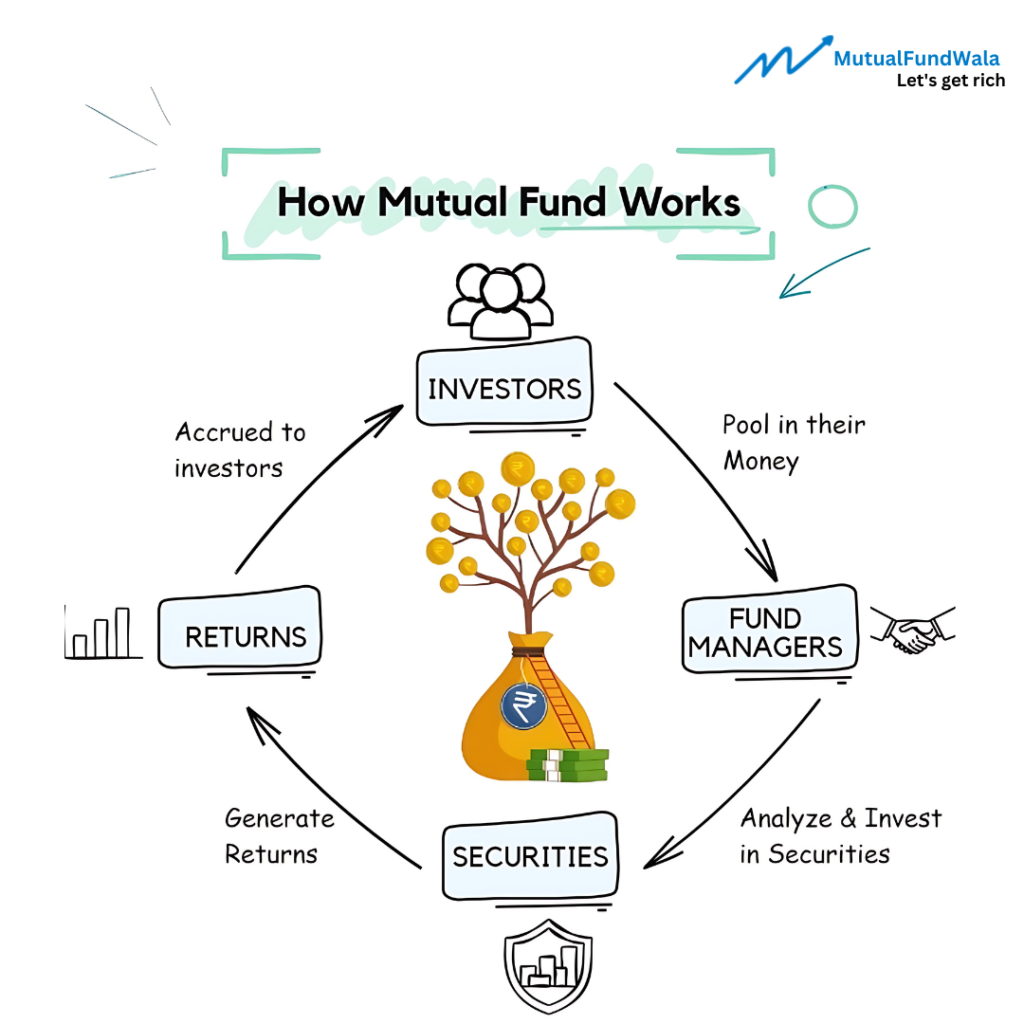
A mutual fund is essentially a shared investment. Instead of you buying shares of one company on your own, a mutual fund pools money from thousands of investors and uses that combined pool to buy a wide range of investments, such as stocks, bonds, or other securities.
When you invest in a mutual fund, you are buying shares of the fund itself, not shares of the individual companies inside it. A professional fund manager, or a team of managers, decides what the fund buys and sells based on the fund’s stated objective. That objective might be growth, income, a mix of both, or tracking a specific market index.
There are two broad categories worth understanding early on.
Actively managed funds are run by a manager or team who research companies and make ongoing decisions about what to buy or sell, with the goal of outperforming a benchmark, such as the S&P 500.
Index funds simply aim to match the performance of a specific market index rather than beat it. Instead of a manager picking stocks, the fund holds a basket of investments designed to mirror that index.
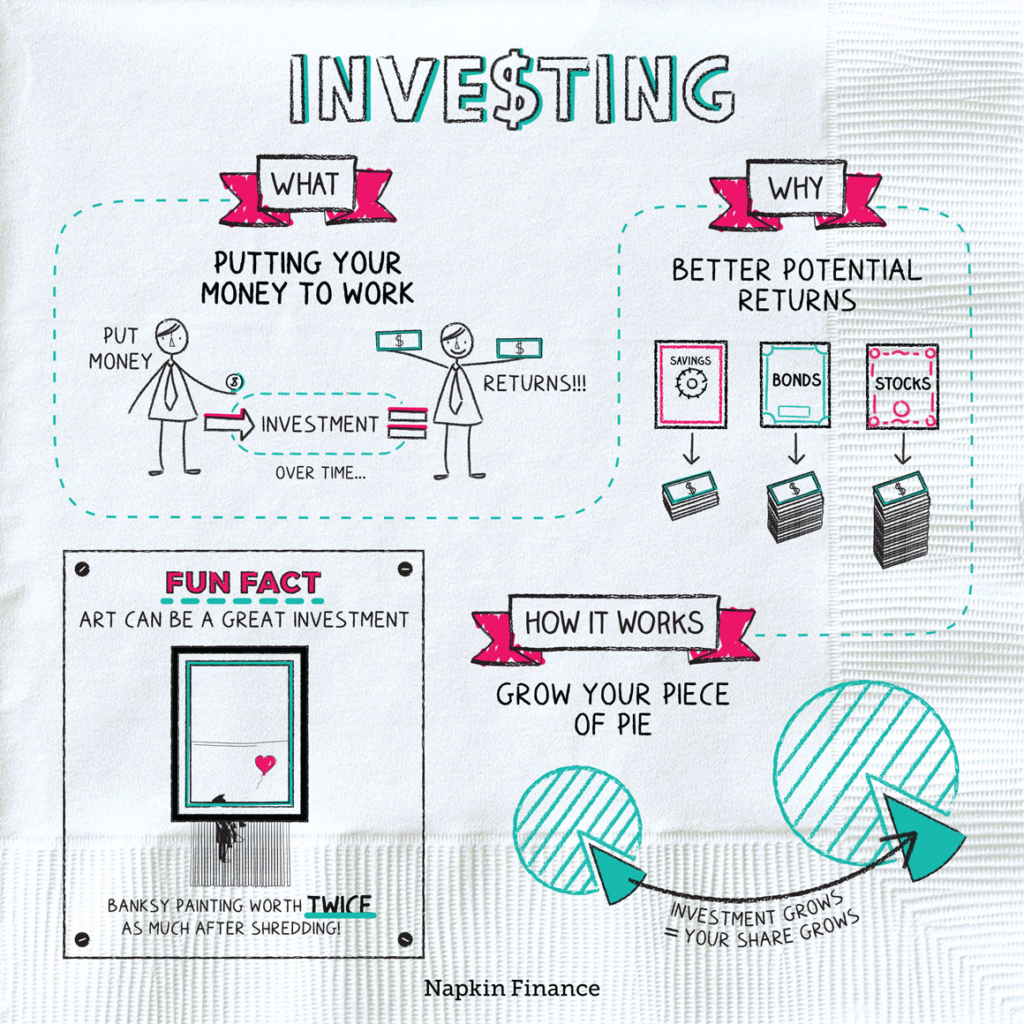
One of the main reasons beginners are drawn to mutual funds is diversification, which means spreading your money across many different investments instead of concentrating it in just one or two. Here is a simple example. If you invested $100 directly into a single company’s stock and that company performed poorly, your entire $100 would be affected. If that same $100 were invested in a mutual fund holding pieces of 500 different companies, a decline in any single company would only affect a small slice of your investment. Diversification does not eliminate risk, but it can help reduce the impact of any one investment performing badly.
Why Consider Investing in Mutual Funds in Your 20s?
The single biggest advantage most 20 somethings have is time. Time is not a guarantee of anything, but it does give your money more opportunities to potentially benefit from compound growth, which is when your investment returns have the chance to generate their own returns over time.
Here is a simplified, hypothetical example to illustrate the idea, not a prediction of what will actually happen. Imagine someone invests $200 per month starting at age 25 and continues until age 65, a 40 year period. Assuming a hypothetical average annual return, purely for illustration, the combination of consistent contributions and years of potential compounding could result in a substantially larger balance than the total amount actually contributed. Now imagine someone who waits until age 35 to start the same $200 monthly contribution. They would have 10 fewer years for that money to potentially grow.
This example is not a promise. Markets fluctuate, some years produce losses, and actual returns can be higher or lower than any hypothetical figure. The point is not that you will earn a specific return. The point is that starting earlier gives your contributions more time in the market, which is one variable within your control, unlike the direction of the market itself.
There is also a behavioral piece here. Many new investors try to time the market, meaning they attempt to buy right before prices rise and sell right before they fall. This is extremely difficult to do consistently, even for professionals. Consistency, meaning contributing regularly regardless of what the market is doing on any given day, tends to be a more realistic approach for most beginners than trying to predict short term movements.
Because you likely will not need retirement money for several decades, you may be able to tolerate more short term market ups and downs than someone who is nearing retirement and needs to withdraw funds soon. That said, risk tolerance is personal. Your comfort with seeing your account value drop temporarily depends on your own financial situation, goals, and emotional relationship with money, not just your age.
What Is SIP Investing in the United States?
If you have spent any time researching investing online, you may have come across the term SIP, or systematic investment plan. This term is used heavily in countries like India, where automatic monthly investing into mutual funds is a mainstream and widely discussed strategy.
In the United States, the equivalent concept is usually called automatic investing or automatic recurring contributions. The idea is the same. Instead of trying to invest a large lump sum all at once, or trying to guess the best day to invest, you set up a recurring transfer, often monthly, from your bank account or paycheck into an investment account.
Many US brokerages and retirement plan providers allow you to schedule these contributions ahead of time so the process happens automatically. For example, a workplace 401(k) plan typically deducts a set percentage of each paycheck automatically. A taxable brokerage account or Roth IRA can often be set up the same way, with a fixed dollar amount pulled from your checking account on a schedule you choose.
This approach connects directly to a concept called dollar cost averaging. Dollar cost averaging means investing a fixed amount of money at regular intervals, regardless of whether prices are up or down at that moment. Here is a practical example. Suppose someone invests $250 every month into a diversified mutual fund. In months when the fund’s share price is lower, that $250 buys more shares. In months when the price is higher, the same $250 buys fewer shares. Over time, this can smooth out the effect of short term price swings, since you are not putting all your money in at a single price point.
Dollar cost averaging has potential advantages, including reducing the temptation to time the market and making investing feel more manageable through smaller, regular contributions. It also has limitations. It does not guarantee a better outcome than investing a lump sum all at once, and it does not protect you from a genuine, sustained market decline. Automatic recurring investing is a discipline tool, not a risk elimination tool. You can still lose money, and the value of your investments will still rise and fall.
How Much Should You Invest in Your 20s?
There is no single dollar amount that applies to everyone, and be cautious of anyone who tells you otherwise. How much you invest depends on your income, your fixed expenses, any debt you are carrying, whether you have emergency savings, and your personal financial goals.
Before investing aggressively, most financial educators suggest building at least a small emergency fund, meaning cash set aside in an accessible account to cover unexpected expenses like a car repair or a medical bill. Without this cushion, an unexpected cost could force you to sell investments at an inconvenient time, potentially at a loss.
It is also worth paying close attention to high interest debt, particularly credit card balances. Credit card interest rates are often significantly higher than typical long term investment returns, so paying down that balance can sometimes provide more guaranteed financial benefit than investing the same dollars.
To make this more concrete, here are a few illustrative, non prescriptive examples of how different income levels might approach the question.
Someone earning $45,000 per year might be balancing student loan payments, rent, and basic living costs. A modest recurring contribution, even $50 or $100 per month into a retirement account, can help build the habit without straining the budget.
Someone earning $70,000 per year may have more flexibility to increase contributions, particularly if they have already built an emergency fund and are managing debt responsibly. This person might consider contributing enough to capture a full employer 401(k) match, if one is offered, before allocating additional money elsewhere.
Someone earning $100,000 per year may have room to contribute more aggressively across multiple account types, such as maxing out available retirement account contributions in a given year, while also investing in a taxable brokerage account for additional long term goals.
These examples are not universal recommendations. Your own numbers will look different based on your cost of living, family circumstances, and financial priorities. What matters most for a beginner is establishing a consistent habit, even if the dollar amount starts small.

Where Should You Invest First?
Many financial educators discuss a general order of operations for allocating investment dollars in the United States, though the right sequence for you depends on your specific situation.
Employer sponsored 401(k) plans are often mentioned first because many employers offer a matching contribution, meaning the company adds money to your account based on how much you contribute, up to a certain percentage. If your employer offers a match, contributing at least enough to receive the full match is often treated as a foundational step, since it represents an immediate benefit tied directly to your contribution.
Roth IRA accounts are another common next consideration. With a Roth IRA, you contribute money that has already been taxed, and in exchange, qualified withdrawals in retirement are generally tax free, assuming you meet certain requirements such as age and how long the account has been open. Contribution limits and income eligibility for Roth IRAs are set by the IRS and adjust periodically, so always verify current figures directly on IRS.gov before making contribution decisions.
Traditional IRA accounts work differently. Contributions may be tax deductible depending on your income and whether you or a spouse have access to a workplace retirement plan, and withdrawals in retirement are generally taxed as ordinary income.
Taxable brokerage accounts do not offer the same tax advantages as retirement accounts, but they also do not come with the same withdrawal restrictions. Money in a taxable account can generally be accessed at any time, which can make it useful for goals outside of retirement.
Deciding which account, or combination of accounts, makes sense for you depends on your income, your employer’s benefits, your tax situation, and your goals. This section is educational and general in nature, not personalized financial or tax advice for your specific circumstances.
How to Choose a Mutual Fund
Once you understand the account you are investing through, the next question is which fund, or funds, to actually hold. Beginners are often overwhelmed by the sheer number of options, but a few key factors can simplify the decision.
Investment objective. Does the fund aim for growth, income, or a blend? Does it focus on US stocks, international stocks, bonds, or a mix?
Risk level. Stock focused funds tend to experience more short term price swings than bond focused funds, though they may also offer different long term growth potential.
Asset allocation. This refers to how the fund’s money is divided among asset types, such as stocks and bonds, and among different sectors or regions.
Expense ratio. This is the annual fee charged as a percentage of your investment, expressed as a percentage. Even a small difference in expense ratio can add up meaningfully over decades, since fees reduce your net returns every single year.
Historical performance. Past returns can offer context, but they never guarantee future results. A fund that performed well in the past may not perform the same way going forward.
Portfolio holdings. Reviewing what a fund actually owns can help you understand what you are really investing in, rather than relying on the fund’s name alone.
Fund size. Very small funds may face different risks or limitations compared to larger, more established funds.
Turnover. This measures how frequently a fund buys and sells its holdings. Higher turnover can sometimes lead to higher trading costs and different tax consequences in taxable accounts.
Minimum investment requirements. Some mutual funds require an initial minimum investment, which can range from no minimum to several thousand dollars.
Tax considerations. Depending on the account type, fund distributions may create tax obligations, which is discussed further later in this guide.
There is no shortcut that replaces doing this research yourself or with the help of a qualified financial professional. Low costs and broad diversification tend to matter more over long time periods than chasing whichever fund performed best last year.
Index Funds vs Actively Managed Mutual Funds
Both index funds and actively managed mutual funds aim to grow your money, but they take different approaches, and understanding the difference can help you decide what fits your preferences.
Index funds attempt to match the performance of a specific benchmark, such as a broad stock market index, rather than beat it. Because they follow a set formula instead of requiring active research and trading, index funds often have lower expense ratios than actively managed funds.
Actively managed funds rely on a manager or team making ongoing decisions about which securities to buy or sell, with the goal of outperforming a benchmark. This hands on approach typically comes with higher expense ratios to compensate for the research and management involved.
In terms of performance, actively managed funds sometimes outperform their benchmark in a given year, but consistently outperforming the market over long periods has proven difficult for many active managers, especially once fees are factored in. This is one reason many long term investors gravitate toward broad market index funds, since lower costs and wide diversification can be appealing for a beginner strategy. That said, this does not mean index funds are automatically the right choice for every investor or every goal. Some investors value the potential for active management in specific market segments, and personal circumstances vary.
Mutual Funds vs ETFs
Exchange traded funds, commonly called ETFs, share some similarities with mutual funds but differ in a few important ways.
Trading. Mutual fund shares are typically bought and sold once per day, at a price calculated after the market closes. ETF shares trade throughout the day on an exchange, similar to individual stocks, with prices that can fluctuate minute to minute.
Pricing. Because mutual funds price only once daily, your order is filled at that day’s closing price. ETFs can be bought or sold at whatever price is available in the market at that specific moment during trading hours.
Minimum investment. Many mutual funds require a minimum initial investment. ETFs are typically purchased by the share, and some brokerages now allow fractional share purchases, which can lower the effective entry point.
Automatic investing. Many mutual funds are designed with automatic recurring contributions in mind, since fractional shares are commonly supported. ETFs have historically been less consistently set up for automatic fractional investing, though many brokerages now support this as well.
Expense ratios. Both mutual funds and ETFs charge expense ratios, and both can range from low to high depending on the specific fund. Index based ETFs and index mutual funds often have comparably low costs.
ETFs have grown in popularity among younger investors partly due to their flexibility, intraday trading, and often lower costs for certain index based options. Neither option is universally superior. The right choice depends on your account type, your investing style, and your personal preferences.
Understanding Investment Risk in Your 20s
Every type of investing involves risk, and mutual funds are no exception. Understanding the different categories of risk can help you set realistic expectations.
Market volatility refers to the natural ups and downs in the value of investments over time. Prices can rise significantly in one period and fall significantly in another, sometimes within the same year.
Stock market risk is the possibility that the value of stocks, and funds that hold stocks, can decline, sometimes sharply and without much warning.
Bond risk includes the possibility that bond values can fall when interest rates rise, along with the risk that a bond issuer could fail to make payments.
Inflation risk is the risk that your money loses purchasing power over time if your investment returns do not keep pace with rising prices.
Concentration risk occurs when too much of your money is invested in a single company, sector, or region, making your overall portfolio more vulnerable to problems specific to that area.
Behavioral risk refers to the tendency for investors to make emotional decisions, such as selling investments during a market downturn out of fear, which can lock in losses that might have otherwise been temporary.
Diversification, discussed earlier, is one of the primary tools used to manage many of these risks, though it cannot eliminate them entirely. It is also important to understand the difference between risk tolerance, meaning your emotional comfort with market fluctuations, and risk capacity, meaning your actual financial ability to withstand a loss based on your timeline and obligations. Money you will need within a short period, such as within the next year or two, generally should not be exposed to unnecessary market volatility, regardless of your age or overall risk tolerance.
A Simple Mutual Fund Strategy for Beginners
Here is a general, step by step framework many beginners consider. This is educational in nature and not a personalized recommendation for your specific situation.
- Build an emergency fund to cover unexpected expenses before investing aggressively.
- Review any high interest debt, particularly credit cards, and consider paying it down.
- Take advantage of an employer retirement plan match, when one is offered and it makes sense for you.
- Understand your retirement account options, including 401(k), Roth IRA, and traditional IRA, and how each fits your tax situation.
- Choose a diversified investment approach rather than concentrating money in a single stock or narrow sector.
- Set up automatic recurring contributions so investing happens consistently without requiring constant decisions.
- Continue investing consistently through both rising and falling markets, rather than pausing during downturns.
- Review your portfolio periodically, such as once or twice a year, rather than checking it daily.
- Increase your contributions as your income grows over time.
- Avoid making emotional decisions, such as selling everything, during market declines.
Example of a Young Investor’s Strategy
Consider a hypothetical 25 year old with an annual income of $65,000, monthly investment contributions of $300, $8,000 in emergency savings, access to an employer 401(k), and an additional Roth IRA.
This person has already built a reasonable emergency cushion, which gives them some flexibility. They might consider contributing enough to their 401(k) to capture any available employer match, since that represents money added on top of their own contribution. From there, they might direct additional monthly contributions toward their Roth IRA, taking advantage of the potential for tax free qualified withdrawals in retirement, up to whatever annual contribution limit applies that year, verified against current IRS figures.
This example is intended purely for educational purposes to illustrate how someone might think through allocating money across different goals and account types. It is not a specific recommendation for any individual reader, since everyone’s income, expenses, debt, and goals are different.
Common Mutual Fund Investing Mistakes in Your 20s
Beginners often make similar mistakes when they first start investing. Recognizing them ahead of time can help you avoid repeating them.
- Waiting for the perfect time to invest. There is rarely, if ever, an obviously perfect moment. Waiting indefinitely often means missing years of potential growth.
- Trying to predict market movements. Even professional investors struggle to consistently time the market. A steady, long term approach tends to be more realistic for most people.
- Ignoring fees. Expense ratios and account fees may look small on paper but can meaningfully reduce returns when compounded over many years.
- Investing money needed for near term expenses. Funds you will need within the next year or two generally do not belong in the stock market, where short term losses are possible.
- Ignoring diversification. Putting most of your money into one stock or one narrow sector increases your exposure to that specific risk.
- Chasing recent performance. A fund that performed exceptionally well last year will not necessarily repeat that performance going forward.
- Selling during market panic. Selling investments after a decline locks in the loss and removes the opportunity to potentially recover when the market rebounds.
- Taking excessive risk simply because of a long time horizon. A long time horizon can support more risk tolerance for some people, but it does not mean unlimited risk is automatically appropriate for everyone.
- Ignoring taxes. Different account types have different tax treatment, and understanding this can affect both your strategy and your after tax returns.
- Not increasing contributions as income grows. Many people keep their contribution amount the same for years, even as their salary increases, missing an opportunity to build wealth faster.
- Following social media investment trends without research. Trends and hot tips shared online are not a substitute for understanding what you are actually investing in and why.
How Compound Growth Can Help Long Term Investors
Compound growth happens when your investment returns generate additional returns over time, in addition to the returns generated by your original contributions. The earlier your money is invested, the more time it potentially has to benefit from this effect, assuming the investment grows over that period.
Here is a simplified, purely hypothetical illustration using different monthly contribution amounts over a long time horizon. These numbers are for educational purposes only, are not a guarantee of any specific outcome, and actual results will vary based on real market performance, which can include extended periods of decline.
Imagine three people, all starting at age 25 and investing until age 65, a 40 year period, each contributing a fixed amount every month with no changes.
- Person A invests $200 per month.
- Person B invests $300 per month.
- Person C invests $500 per month.
Assuming the exact same hypothetical average annual return for all three, Person C would end up with meaningfully more than Person B, and Person B more than Person A, purely because of the larger monthly contribution compounding over the same amount of time. This illustrates two separate variables that affect long term outcomes, how much you contribute and how long your money stays invested, both of which are, at least partially, within your control, unlike the actual return the market delivers in any given year.
It is worth repeating that these figures are illustrative only. Real markets experience years of strong growth and years of significant decline, sometimes in unpredictable sequences. No one can guarantee what your actual return will be over any period of time.
Taxes and Mutual Funds in the United States
Taxes are an important, and often overlooked, part of investing, and they can vary significantly depending on the type of account your investments are held in.
Retirement accounts, such as a 401(k), traditional IRA, or Roth IRA, offer specific tax treatment. In many cases, investments inside these accounts grow without being taxed year to year, though the tax treatment of contributions and withdrawals differs by account type.
Taxable brokerage accounts do not offer these same protections. Within a taxable account, you may owe taxes on capital gains, meaning profit from selling an investment for more than you paid, as well as on dividends, which are payments some companies or funds distribute to shareholders.
One detail that surprises many new investors is that mutual funds can distribute capital gains to shareholders even if you personally did not sell any shares that year. This happens because the fund itself may sell holdings inside the portfolio, generating gains that are then passed along to everyone who owns the fund. In a taxable account, this can create a tax obligation even in a year when your own account balance decreased.
Because tax rules, contribution limits, and income thresholds change periodically, it is important to verify current figures directly from official sources, such as IRS.gov, rather than relying on outdated numbers. For questions specific to your own tax situation, consulting a qualified tax professional is strongly recommended.
How to Start Investing in Mutual Funds Today
If you are ready to take a first step, here is a simple checklist to work through.
- Determine your financial goals, such as retirement, a home purchase, or general long term wealth building.
- Review your current budget to understand what you can realistically set aside each month.
- Build emergency savings before committing to aggressive investing.
- Pay attention to any high interest debt you are carrying.
- Choose an appropriate investment account based on your goals and tax situation.
- Research diversified mutual funds, or other suitable investments, that align with your objective and risk level.
- Review expense ratios and other fees before committing money.
- Set up automatic recurring contributions so investing becomes a consistent habit.
- Monitor your investments periodically without obsessing over daily market movements.
- Increase your contributions when your income increases.
Frequently Asked Questions About Mutual Funds in Your 20s
Is it worth investing in mutual funds in your 20s? Many financial educators view your 20s as a potentially advantageous time to start investing because of the long time horizon before retirement, though outcomes are never guaranteed and depend on your personal financial situation.
How much should a 20 year old invest each month? There is no universal number. The right amount depends on your income, expenses, debt, and goals, and even small, consistent contributions can help build a long term habit.
Are mutual funds safe? Mutual funds are not risk free. Their value can rise and fall based on the performance of the underlying investments they hold, and it is possible to lose money.
Can I lose money in a mutual fund? Yes. Mutual funds are subject to market risk, and the value of your investment can decline, sometimes significantly, over shorter periods.
Are index funds better than mutual funds? Index funds are a type of mutual fund, or can be structured as an ETF, so this is not an either or comparison. Index funds specifically tend to have lower fees than actively managed funds, but the right choice depends on your goals and preferences.
Should I invest in a 401(k) or mutual funds? This is not necessarily a choice between two separate things. A 401(k) is a type of account, and it often includes mutual funds as investment options within it, so many people do both at the same time.
What is the difference between an ETF and a mutual fund? ETFs trade throughout the day like stocks, while mutual funds are priced once per day after the market closes. Both can offer diversification and vary in cost.
Can I start investing with $100? Many brokerages and retirement plans allow you to start with a relatively small amount, and some support fractional shares, making it possible to begin with modest sums.
What is automatic recurring investing? It refers to setting up scheduled, regular contributions from your bank account or paycheck into an investment account, similar to the concept known internationally as a systematic investment plan.
How long should I hold a mutual fund? This depends on your goal. Long term goals, such as retirement, generally align with a long holding period, while money needed sooner should typically be kept in lower risk, more accessible accounts.
Source link
https://www.fidelity.com/learning-center/smart-money/roth-401k-contribution-limits
https://www.irs.gov/newsroom/401k-limit-increases-to-24500-for-2026-ira-limit-increases-to-7500