

iPhone 18 Pro and iPhone 18 Pro Max price, release date, camera, and battery life explained. See specs, pros and cons, and which iPhone 18 to buy.
Introduction
Apple’s fall event on September 9, 2026, brought two new iPhones into the world: the iPhone 18 Pro and the iPhone 18 Pro Max. The iPhone 18 release date, price, and full specs are now official, so if you’re searching for the iPhone 18 price or wondering whether now is the right time to upgrade, the details below are drawn directly from Apple. One thing to know up front: if you were hoping for a standard iPhone 18 to sit alongside the Pro models, that phone simply is not here yet. Apple has restructured its release calendar so that the standard iPhone 18 and a budget iPhone 18e are expected to arrive in spring 2027, while the Pro models launch in the traditional September slot alongside Apple’s first foldable phone, the iPhone Duo.
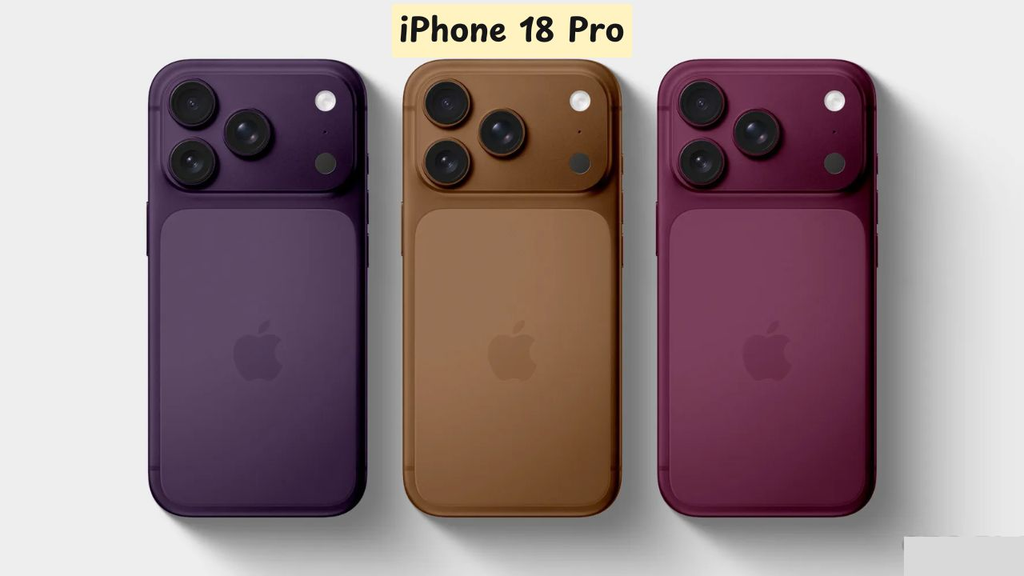
That makes this a smaller, more focused launch than usual, but not a quiet one. The two new Pro phones bring a genuinely new iPhone 18 camera system with a variable aperture lens, Apple’s first 2-nanometer chip in the A20 Pro, a redesigned cooling system, meaningfully longer iPhone 18 battery life, and the initial rollout of “Siri AI,” Apple’s long-delayed overhaul of its voice assistant. Whether that adds up to a phone worth buying at this iPhone 18 price depends heavily on which iPhone you’re using right now, and this guide walks through the specifics so you can decide for yourself.
Everything below reflects Apple’s official September 9 announcement and its published specifications page. Where a detail has not been confirmed by Apple, such as pricing for the standard iPhone 18 or details about the iPhone Duo, this article says so plainly rather than guessing.
The iPhone 18 Lineup Explained
As of publication, Apple has officially announced only two members of the iPhone 18 family for the U.S. market:
- iPhone 18 Pro — 6.3-inch display, starts at $1,199
- iPhone 18 Pro Max — 6.9-inch display, starts at $1,299
Apple also unveiled its first foldable phone, called iPhone Duo, at the same event, though full technical details and U.S. pricing for that device were announced separately and are not the focus of this guide. There is currently no standard iPhone 18 or iPhone 18e on sale. Industry reporting from outlets that track Apple’s supply chain suggests those models may arrive in spring 2027, but Apple has not confirmed a date, price, or specification for either one, so treat any spring 2027 figures you see elsewhere as unconfirmed rumors, not fact.
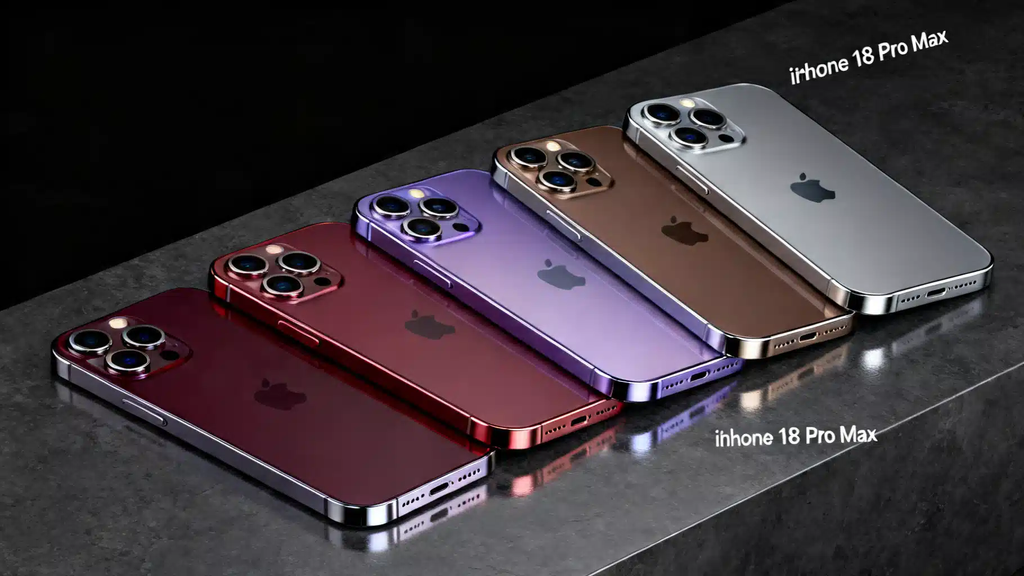
Both current models run iOS 27, use Apple’s new A20 Pro chip, and are available in four finishes: black, silver, glacier, and a new burgundy. Storage now spans 256GB, 512GB, 1TB, and 2TB, the first time a 2TB option has been available on the smaller Pro model rather than only the Max. Apple has not published official RAM figures, which is normal practice for the company, though early teardown and retailer listings point to 12GB.
iPhone 18 Pro
The iPhone 18 Pro is the smaller of the two new flagships, with a 6.3-inch display, but it shares nearly all of its meaningful upgrades with its larger sibling.
Display and design: The screen size and general aluminum-and-glass design carry over from the iPhone 17 Pro, so this is not a visual overhaul. The standout physical change is a smaller, more capable Dynamic Island that can now display up to three Live Activities at once while still handling Face ID.
A20 Pro chip: Built on a 2-nanometer manufacturing process, a first for any iPhone, the A20 Pro includes a new 6-core CPU, a 7-core GPU that Apple says is up to 40 percent faster than the previous A19 Pro, and a dual 16-core Neural Engine, doubling the raw AI processing capacity of last year’s chip. Memory bandwidth is up 50 percent as well, which mainly helps with heavier tasks like editing 4K video or running larger on-device AI models.
Thermal management: Apple redesigned the internal packaging so the chip sits beside the memory rather than stacked with it, freeing it to connect directly to a new vapor chamber with three times the surface area of the one in the iPhone 17 Pro. Apple says this enables up to a 40 percent gain in sustained performance, meaning the phone should throttle less during long gaming sessions or video exports.
Battery life: The eSIM-only version of the iPhone 18 Pro offers up to 36 hours of video playback, according to Apple’s testing. It supports wired fast charging up to 50 percent in about 15 minutes and wireless charging to 50 percent in 30 minutes with compatible chargers.
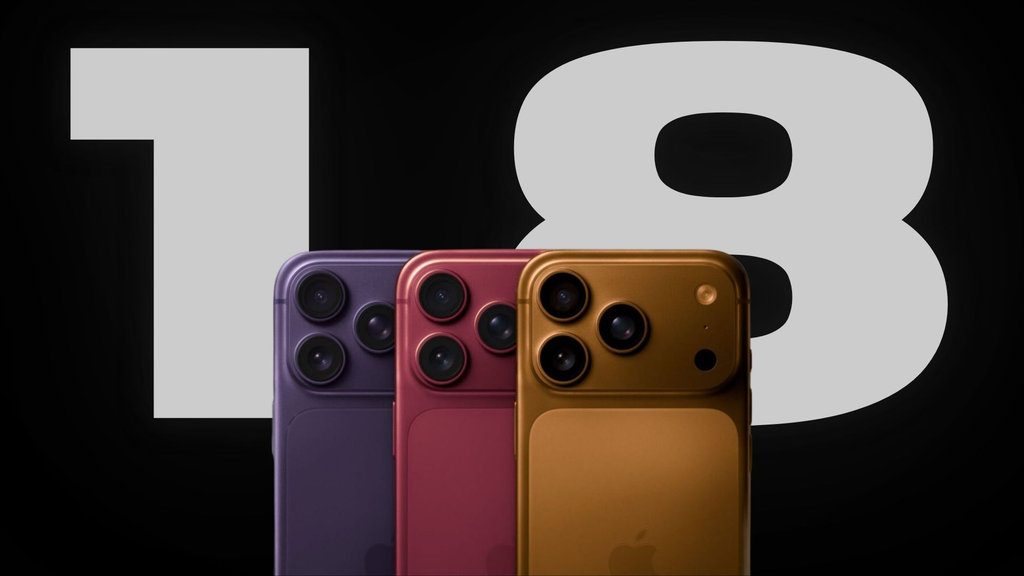
Camera system: This is the headline upgrade. The 48MP Fusion Main camera now has a genuine variable aperture, ranging from about f/1.48 for low light up to f/4 for greater depth of field in group shots, controlled by six laser-cut blades inside the lens. There is also a 48MP Ultra Wide camera and a 48MP telephoto camera offering 4x optical zoom with an additional 8x optical-quality crop, plus a new 18MP front camera with autofocus.
Pro camera controls: A redesigned Camera app lets photographers manually set aperture, shutter speed, and white balance, and check exposure with a built-in histogram, features aimed squarely at people who shoot seriously on their phone.
AI features: The phone ships with Apple Intelligence and the first beta release of Siri AI, described below in more detail.
Connectivity: The Pro introduces Apple’s own C2 modem, replacing the Qualcomm modem used in the iPhone 17 Pro, alongside the N1 chip for Wi-Fi 7, Bluetooth 6, and Thread.
Storage and price: 256GB ($1,199), 512GB ($1,399), 1TB ($1,799), and 2TB ($2,399).
For most people, these upgrades mean a phone that runs cooler under load, shoots noticeably better low-light and group photos, and lasts longer between charges, even if it looks nearly identical to last year’s model sitting next to it.
iPhone 18 Pro Max
The iPhone 18 Pro Max shares its chip, camera hardware, and software with the standard Pro, but scales things up in two specific ways: screen size and battery.
Display: A 6.9-inch panel, matching the size of the outgoing iPhone 17 Pro Max.
Battery: This is where the Pro Max pulls ahead. Apple calls it the largest battery life increase in iPhone history for the eSIM-only version, rated at up to 45 hours of video playback, versus 36 hours on the smaller Pro. Just five minutes of wired charging is rated to add about seven hours of video playback, and Apple’s real-world usage model puts typical daily use at up to 30 hours on a full charge.
Camera and performance: Identical camera hardware and the same A20 Pro chip as the standard Pro, so photo and video quality, aperture control, and gaming or editing performance should be essentially the same between the two phones.
Cooling: Same redesigned vapor chamber system as the Pro, scaled for the larger chassis.
Storage and price: 256GB ($1,299), 512GB ($1,499), 1TB ($1,899), and 2TB ($2,499).
Who should buy it: Anyone who already prefers a larger phone, watches a lot of video, or simply wants to charge as infrequently as possible. If screen size and stamina matter more to you than a smaller, lighter phone, the Pro Max is the one to get. If you find today’s large phones unwieldy, the standard Pro delivers nearly the same experience in a notably more pocketable size.
iPhone 18 vs iPhone 18 Pro vs iPhone 18 Pro Max
Because there is no standard iPhone 18 on the market yet, this comparison covers the two available models. A “standard iPhone 18” row is included only to make clear that it does not currently exist.
| Model | Price | Display | Processor | Main Camera | Telephoto | Battery (video playback) | Storage | Best For |
| iPhone 18 | Not yet released | Unannounced | Unannounced | Unannounced | Unannounced | Unannounced | Unannounced | N/A |
| iPhone 18 Pro | From $1,199 | 6.3″ | A20 Pro | 48MP variable aperture | 48MP, 4x optical (8x crop) | Up to 36 hrs | 256GB–2TB | Most people wanting flagship power in a compact body |
| iPhone 18 Pro Max | From $1,299 | 6.9″ | A20 Pro | 48MP variable aperture | 48MP, 4x optical (8x crop) | Up to 45 hrs | 256GB–2TB | Battery life and screen real estate |
Major New iPhone 18 Features
A20 Pro chip. Apple’s first 2nm chip brings a faster CPU, GPU, and a doubled Neural Engine. For the average user, this mostly shows up as smoother multitasking, faster app launches, and more headroom for AI features over the next several years, rather than something you’ll notice in day-to-day scrolling.
Improved thermal management. The new vapor chamber keeps performance from dropping during demanding tasks like gaming or 4K video export. Practically, this means fewer slowdowns during long sessions rather than a brand-new capability.
Variable camera aperture. The biggest camera change in years. It automatically widens for low light and narrows for depth of field in group shots, and photography enthusiasts can control it manually. Everyday users benefit even if they never touch the manual controls, since the camera makes these adjustments on its own.
Improved low-light photography. A wider maximum aperture plus a new sensor and computational pipeline should mean noticeably cleaner night and indoor shots.
Pro camera controls. Manual aperture, shutter speed, and white balance controls, plus a histogram, aimed at serious photographers and content creators rather than casual snapshot takers.
Siri AI and Apple Intelligence. A more conversational, context-aware assistant rolling out in beta. Covered in detail in its own section below.
Improved battery life. A meaningful jump for both models, especially the Pro Max, driven by chip efficiency and, for eSIM-only units, extra internal space freed up by removing the physical SIM tray.
Faster charging. Up to 50 percent charge in around 15 minutes wired.
Smaller, more capable Dynamic Island. Displays more information without taking up more screen space.
Improved video recording. Cinematic effects can now be applied after filming at up to 60 fps, Time-lapse mode supports 4K Dolby Vision HDR, and Audio Mix can isolate music from other sound.
Apple Reference Image. A new opt-in authenticity feature that captures signed sensor data alongside a photo, creating an unalterable reference image you can compare against an edited version, useful for photojournalists or anyone who wants to prove a photo hasn’t been manipulated. Apple notes this feature is not available at launch in China, and the capture function is not available at launch in the EU.
C2 modem. Apple’s new in-house cellular modem, which the company says delivers faster uploads and 15 percent lower power consumption than its predecessor, and now supports mmWave 5G in the U.S.
iPhone 18 Camera: What’s New?
The 48MP Fusion Main camera with variable aperture is genuinely new territory for iPhone. Six internal blades shift the aperture across a range from roughly f/1.48 up to f/4, and the camera does this automatically based on the scene, widening for low light and narrowing to keep more of a group photo in focus. Apple’s testing shows Night mode shots that let in noticeably more light than before, and group photos with sharper detail toward the back of the frame.
The Ultra Wide camera remains a 48MP sensor, while the telephoto camera jumps to a 48MP sensor with a native 4x optical zoom and a 12MP optical-quality crop that extends to 8x, giving photographers more usable zoom steps than the iPhone 17 Pro’s telephoto, which offered a 5x optical zoom from a 12MP sensor.
For video, Apple added the ability to apply Cinematic mode’s focus and depth effects after recording footage shot at up to 60 fps, upgraded Time-lapse mode to support 4K in Dolby Vision HDR, and improved Audio Mix with the ability to isolate music separately from voices.
Pro controls bring manual aperture, shutter speed, white balance, and a live histogram directly into the Camera app, a genuine upgrade for content creators who previously needed a third-party app for that level of control. Combined with updated Photographic Styles that now let you adjust texture and grain, the camera system gives creators considerably more room to develop a personal look straight out of the camera.
Compared with the iPhone 17 Pro, the improvements are concentrated in three areas: the new aperture control, a longer telephoto range, and more granular manual controls. Apple has not published side-by-side low-light benchmarks against the 17 Pro, so exact quality gains will become clearer once independent reviewers publish their testing.
iPhone 18 Performance
The A20 Pro’s 6-core CPU and 7-core GPU represent Apple’s first shift to a 2-nanometer process, which generally means better performance per watt rather than just faster raw clock speeds. Apple states the GPU is up to 40 percent faster than the A19 Pro, a jump that should matter most for demanding mobile games and GPU-heavy apps like video editors.
The dual 16-core Neural Engine doubles the chip’s AI processing headroom, which matters for on-device tasks like Siri AI’s context understanding, computational photography, and any third-party apps that run their own AI models locally rather than in the cloud. For everyday multitasking, web browsing, and social media, the practical difference compared with last year’s A19 Pro will be modest, since that chip was already more than capable for those tasks. The bigger benefits will show up in video editing, gaming under load, and the phone’s ability to run more advanced AI features without lag or excessive battery drain, especially now that the improved vapor chamber keeps the chip running at higher speeds for longer.
iPhone 18 Battery Life and Charging
Apple’s official video playback figures, measured on eSIM-only units, are up to 36 hours for the iPhone 18 Pro and up to 45 hours for the iPhone 18 Pro Max. Models with a physical SIM tray get roughly two hours less playback, since that internal space isn’t available for extra battery cells. These are best-case, controlled test figures; real-world battery life will vary based on how you use the phone, your carrier signal, and which features you have running.
On the charging side, both phones support up to 50 percent charge in about 15 minutes with a 60W-or-higher USB-C charger and compatible cable, or 50 percent in 30 minutes wirelessly with a 35W-or-higher MagSafe charger. Apple also highlights that just five minutes of wired charging on the Pro Max can add roughly seven hours of video playback in a pinch.
Is battery life alone a reason to upgrade? If you’re coming from an iPhone 15 or 16 series phone and regularly find yourself reaching for a charger by mid-afternoon, yes, this is one of the more tangible year-over-year improvements Apple has made in a while. If you’re coming from an iPhone 17 Pro or Pro Max and already make it through a full day comfortably, the gain will be noticeable but not transformative.
iOS 27 and AI
iOS 27 ships with the next generation of Apple Intelligence and the first beta release of Siri AI, an entirely rebuilt version of Siri that Apple describes as more personal, capable, and conversational than before.
Siri AI can draw on personal context across your messages, emails, and photos to help you find things, use “onscreen awareness” to take action based on whatever is currently on your screen, and answer general knowledge questions. A new Siri mode in the Camera app lets you point your phone at something and ask about it, and you can dictate writing tasks by simply describing what you want. Elsewhere, Apple Intelligence adds photo composition tools like Spatial Reframing and an improved Clean Up tool, a more photorealistic Image Playground, and a Safari feature called Notify Me that watches web pages for changes like restocks or price drops.
Apple says privacy is handled through a mix of on-device processing and Private Cloud Compute, which extends the same privacy protections into the cloud for tasks that need more processing power than the phone can handle locally.
Not everything is available at launch. Siri AI is rolling out only in beta starting September 14, initially in English, with French, Japanese, Korean, Portuguese, and Spanish support following in October. Apple has also stated that Siri AI, along with Apple Intelligence features that depend on it, will not initially be available in the European Union on iOS, iPadOS, or watchOS. Some server-dependent Apple Intelligence features carry daily usage limits that Apple says may vary by demand and could eventually require a paid subscription for expanded access. For U.S. users, the practical takeaway is that most Apple Intelligence features are usable at launch, but Siri AI specifically will feel like an evolving beta rather than a finished product for the first several months.
Advantages of iPhone 18 Pro and Pro Max
- Camera versatility: Variable aperture, a longer telephoto range, and genuine manual controls make this the most capable iPhone camera system yet for both casual and serious photographers.
- Performance headroom: The A20 Pro’s 2nm design and improved cooling mean better sustained performance for gaming, editing, and future software updates.
- Battery life: A real, measurable jump, particularly on the Pro Max.
- Software support: Apple typically supports iPhones with major iOS updates for five to six years, among the longest in the industry.
- Privacy approach: On-device AI processing plus Private Cloud Compute gives Apple Intelligence features without sending everything to a third-party server.
- Ecosystem integration: Deep integration with Mac, iPad, Apple Watch, and AirPods remains a strong selling point for anyone already invested in Apple’s ecosystem.
- Build quality and display: Ceramic Shield front glass, an aluminum frame, and a bright, high-refresh-rate OLED display remain class-leading.
- Resale value: iPhones, especially Pro models, tend to hold their resale value better than most Android competitors, which matters if you plan to trade in every year or two.
Disadvantages of iPhone 18 Pro and Pro Max
- High starting price: $1,199 for the Pro and $1,299 for the Pro Max is expensive by any measure, and higher-storage configurations climb quickly, up to $2,399 and $2,499 for the 2TB models.
- Design carryover: If you were hoping for a dramatically new look, you won’t find one here. The design is close to the iPhone 17 Pro generation.
- No standard iPhone 18 yet: Buyers who prefer a smaller, cheaper flagship-adjacent phone without the Pro price tag have nothing new to buy in this generation, since Apple has pushed that model to spring 2027.
- AI features still rolling out: Siri AI is a beta at launch with limited language support and no EU availability, so some of the marketing focus is on a feature that is not fully finished.
- Ecosystem lock-in: As with every iPhone, you’re buying into Apple’s closed ecosystem, which some users find restrictive compared with the customization options on Android.
- Upgrading from an iPhone 17 Pro is a hard sell financially: The core design, screen size, and general experience are similar enough that many recent Pro owners won’t feel a dramatic difference day to day.
iPhone 18 vs iPhone 17
iPhone 17 to iPhone 18: This comparison isn’t possible yet, since the standard iPhone 18 has not been released. If you own an iPhone 17 and want to stay in the non-Pro tier, there is currently nothing new to move to; keeping your iPhone 17 is the only option until Apple’s next standard model arrives.
iPhone 17 Pro to iPhone 18 Pro: Upgrade if camera versatility (particularly the variable aperture and extended zoom range) or longer battery life would meaningfully improve how you use your phone, or if you want the fastest available chip for the next several years. Keep your iPhone 17 Pro if you’re satisfied with its camera and battery performance, since the physical design and everyday experience haven’t changed dramatically.
iPhone 17 Pro Max to iPhone 18 Pro Max: The battery life jump is the strongest argument here, described by Apple as the largest generational battery improvement in iPhone history for eSIM-only units. If all-day battery anxiety is a real issue for you, this upgrade addresses it directly. If your current battery life is already sufficient, the case for upgrading is weaker.
In both Pro comparisons, the honest answer for most owners of last year’s phone is that this is a solid but not essential upgrade, worth making only if a specific new feature, like the variable aperture camera or extended battery life, solves a real problem you have with your current phone.
iPhone 18 vs Samsung Galaxy S26 Ultra
For U.S. shoppers cross-shopping Android, the Galaxy S26 Ultra is Samsung’s current flagship, starting at $1,299.99 with a 6.9-inch display, a Snapdragon 8 Elite Gen 5 processor, a 200MP main camera, and S Pen support built in.
Performance: Both chips are near the top of the mobile performance charts, with Apple’s A20 Pro and Samsung’s Snapdragon 8 Elite Gen 5 trading blows depending on the specific workload. Neither will feel like a bottleneck for typical use.
Camera: The Galaxy S26 Ultra leans on raw megapixel count and a dedicated 5x periscope telephoto lens, while the iPhone 18 Pro leans on computational photography and its new variable aperture. Samsung’s camera setup offers more zoom range out of the box; Apple’s offers more creative control over depth of field and light.
AI: Samsung’s Galaxy AI features are more broadly available today, since Apple’s Siri AI is still in beta with limited language and regional support. Apple’s approach emphasizes on-device privacy more heavily.
Battery: Both companies have pushed hard on battery life this cycle. The Galaxy S26 Ultra uses a 5,000mAh battery with 60W wired charging, while Apple doesn’t publish battery capacity in mAh but rates the Pro Max at up to 45 hours of video playback with 50 percent recharge in about 15 minutes.
Display: Both phones offer excellent, high-refresh-rate OLED displays at a similar size in the Max/Ultra tier. Samsung’s S26 Ultra adds a unique Privacy Display mode.
Software and ecosystem: iOS offers longer guaranteed update support and tighter integration with other Apple devices. Android and One UI offer more customization and, with the S26 Ultra, a built-in S Pen for note-taking and sketching.
Privacy: Both companies market privacy features prominently. Apple’s approach centers on on-device processing and Private Cloud Compute; Samsung has followed a similar hybrid on-device-and-cloud model with recent Galaxy AI updates.
Price: Very close, with the iPhone 18 Pro Max at $1,299 and the Galaxy S26 Ultra at $1,299.99 for the base 256GB configuration.
There isn’t a clear universal winner here. If you value the S Pen, more customization, and a longer native zoom range, the Galaxy S26 Ultra is compelling. If you value Apple’s software support timeline, ecosystem integration, and the new camera control options, the iPhone 18 Pro Max is the stronger pick.
Should I Buy the iPhone 18? Which Model Fits You Best
Best for most people: iPhone 18 Pro. It has the same chip, camera hardware, and AI features as the Pro Max in a more manageable size and for $100 less.
Best for photographers: iPhone 18 Pro or Pro Max, thanks to the variable aperture, extended telephoto zoom, and new Pro camera controls with histogram and manual settings.
Best for content creators: iPhone 18 Pro Max, for the larger screen to review footage and the longest battery life for shooting on the go.
Best for gamers: Either Pro model, since both share the A20 Pro chip and the improved vapor chamber cooling that sustains performance during long sessions.
Best for battery life: iPhone 18 Pro Max, with its rated 45 hours of video playback on eSIM-only units.
Best for professionals: iPhone 18 Pro Max, for the combination of screen size, battery life, and camera control suited to demanding workdays.
Best value: iPhone 18 Pro at 256GB, which gives you the full chip, camera, and AI feature set without paying for storage most people won’t use.
Best large-screen iPhone: iPhone 18 Pro Max, with its 6.9-inch display.
Best premium option: iPhone 18 Pro Max in the 1TB or 2TB configuration, for anyone who shoots extensively in ProRes video or wants maximum future-proofing.
Who Should Not Buy the iPhone 18?
- Recent iPhone 17 Pro or Pro Max owners who are happy with their current camera and battery life will likely find the differences incremental rather than essential.
- People who don’t use advanced camera features probably won’t notice or use variable aperture, manual Pro controls, or the extended telephoto range enough to justify the cost.
- Budget-conscious buyers should look at older iPhone models or wait for the standard iPhone 18, which is expected to arrive at a lower price point in spring 2027, though Apple has not confirmed pricing.
- People who prefer deep customization on Android, including things like default app changes, more flexible home screens, or S Pen support, may find iOS still feels restrictive by comparison.
- Anyone whose current phone already meets their needs in day-to-day use has little practical reason to spend over a thousand dollars on a refresh this specific.
iPhone 18 Price, Release Date, and Availability in the U.S.
- iPhone 18 Pro: Starts at $1,199 (256GB), rising to $1,399 (512GB), $1,799 (1TB), and $2,399 (2TB).
- iPhone 18 Pro Max: Starts at $1,299 (256GB), rising to $1,499 (512GB), $1,899 (1TB), and $2,499 (2TB).
- Monthly financing: Apple lists the Pro from $49.95 per month and the Pro Max from $54.12 per month over 24 months through Apple Card Monthly Installments. A separate Apple Upgrade leasing program through Klarna starts as low as $34.99 per month for 24 months.
- Trade-in: Apple’s own trade-in program offers $175 to $885 in instant credit for eligible devices from iPhone 13 onward. Select carriers offer up to $1,200 in credit toward a new Pro model when trading in an iPhone 14 or later, in any condition, through carrier-specific deals.
- Carrier promotions: Available through AT&T, T-Mobile, and Verizon at launch, with terms varying by carrier and typically requiring a new line or specific plan.
- Release timeline: Announced September 9, 2026. Pre-orders opened at 5 a.m. Pacific on Saturday, September 12, 2026. General availability began Friday, September 18, 2026, in more than 65 countries and regions, including the U.S., with 20 additional countries following on September 25.
- iOS 27: Available as a free update starting Monday, September 14, 2026, for compatible devices.
Pricing varies by market outside the U.S., and this guide focuses exclusively on U.S. figures.
Final Verdict
The iPhone 18 Pro and Pro Max are a genuinely strong pair of phones built around three real upgrades: a more versatile camera system with true aperture control, a noticeably cooler and more sustained-performing chip, and meaningfully better battery life, especially on the Pro Max. What they are not is a dramatic visual reinvention, and with no standard iPhone 18 on shelves yet, shoppers who wanted a more affordable flagship option this fall are left waiting.
Is the iPhone 18 Pro worth buying? Yes, particularly if you’re coming from an iPhone 15, 16, or earlier and want a meaningful jump in camera capability, performance, and battery life.
Which model offers the best balance? The iPhone 18 Pro, for most buyers. It delivers the same core experience as the Pro Max for $100 less, in a size that’s easier to use one-handed.
Who should choose the Pro Max? Anyone prioritizing screen size, maximum battery life, or heavy video and content creation work.
Who should wait? Owners of an iPhone 17 Pro or Pro Max who are satisfied with their current phone, and anyone specifically waiting for a lower-priced standard iPhone 18, which Apple has not yet confirmed but which industry reporting expects in spring 2027.
Is upgrading from an iPhone 17 worth it? For Pro owners, only if the camera or battery improvements solve a specific frustration you have today. For non-Pro iPhone 17 owners, there is currently no direct standard iPhone 18 to compare against.
Frequently Asked Questions
1. How much does the iPhone 18 Pro cost in the U.S.? It starts at $1,199 for the 256GB model, with 512GB at $1,399, 1TB at $1,799, and 2TB at $2,399.
2. How much does the iPhone 18 Pro Max cost? It starts at $1,299 for 256GB, with 512GB at $1,499, 1TB at $1,899, and 2TB at $2,499.
3. What is new in the iPhone 18 Pro? A variable aperture 48MP Main camera, a redesigned telephoto with extended zoom, the A20 Pro chip built on a 2-nanometer process, a new vapor chamber cooling system, longer battery life, a smaller and more capable Dynamic Island, and the initial beta rollout of Siri AI.
4. Does the iPhone 18 have a better camera? The iPhone 18 Pro and Pro Max have a notably upgraded camera system compared with the iPhone 17 Pro, headlined by variable aperture control and an extended telephoto zoom range. A standard iPhone 18 has not been released yet, so no comparison is possible for that model.
5. Is the iPhone 18 worth upgrading from iPhone 17? For Pro owners, it’s a solid but non-essential upgrade unless the camera or battery improvements address a specific need. There is no standard iPhone 18 available yet to compare against the iPhone 17.
6. What is the difference between iPhone 18 Pro and Pro Max? Mainly display size (6.3 inches versus 6.9 inches) and battery life (up to 36 hours of video playback versus up to 45 hours). The chip, camera hardware, and AI features are otherwise the same.
7. How good is the iPhone 18 battery life? Very good by Apple’s own testing: up to 36 hours of video playback on the Pro and up to 45 hours on the Pro Max for eSIM-only units, with fast charging to 50 percent in about 15 minutes wired.
8. What is the A20 Pro chip? Apple’s newest processor, built on a 2-nanometer manufacturing process for the first time, featuring a 6-core CPU, a 7-core GPU up to 40 percent faster than last year’s chip, and a dual 16-core Neural Engine for AI tasks.
9. What AI features does the iPhone 18 support? Apple Intelligence and the new Siri AI, which uses personal context and onscreen awareness to help with tasks. Siri AI is rolling out in beta starting in English, with more languages following in October, and it is not initially available in the EU.
10. Which iPhone 18 model should I buy? Most people should choose the iPhone 18 Pro for the best balance of price and features. Choose the Pro Max if battery life and screen size matter more to you than a smaller, lighter phone.
Key Takeaways
- Apple has only released the iPhone 18 Pro ($1,199) and iPhone 18 Pro Max ($1,299) so far; a standard iPhone 18 is not yet available and isn’t expected until spring 2027 at the earliest.
- The biggest upgrade is the camera system, headlined by a true variable aperture Main lens and an extended telephoto zoom range.
- The A20 Pro chip, built on a 2-nanometer process with a redesigned cooling system, delivers stronger sustained performance than previous iPhones.
- Battery life sees a real jump, especially on the Pro Max, which is rated for up to 45 hours of video playback on eSIM-only units.
- Siri AI, Apple’s overhauled assistant, launches only in beta with limited language support and isn’t initially available in the EU, so treat it as a work in progress rather than a finished feature.
- Source link
- https://www.apple.com/newsroom/2026/09/apple-debuts-iphone-18-pro-and-iphone-18-pro-max/